After getting some questions after last month’s blog post about resume writing and because I don’t want any job seekers to miss out, I decided to continue the topic this month with a Part 2. What hasn’t changed since our last conversation is the state of the job market. Reading job postings while crossing your fingers in hopes that it’s not a fake listing or another phishing scam, while trying to get the magic formatting formula that will allow your document to get past the dreaded Applicant Tracking Software (ATS) troll guarding the hiring manager’s inbox is like walking barefoot and blindfolded down a thousand-foot hallway floor covered with a cornucopia of loose Lego. The search for employment is not a quest for the faint of heart, but maybe I can give you a few tips to help ease the journey. An easy-to-use format, some additional tips regarding ATS scans, and some thoughts on resume tailoring may help you along your journey.
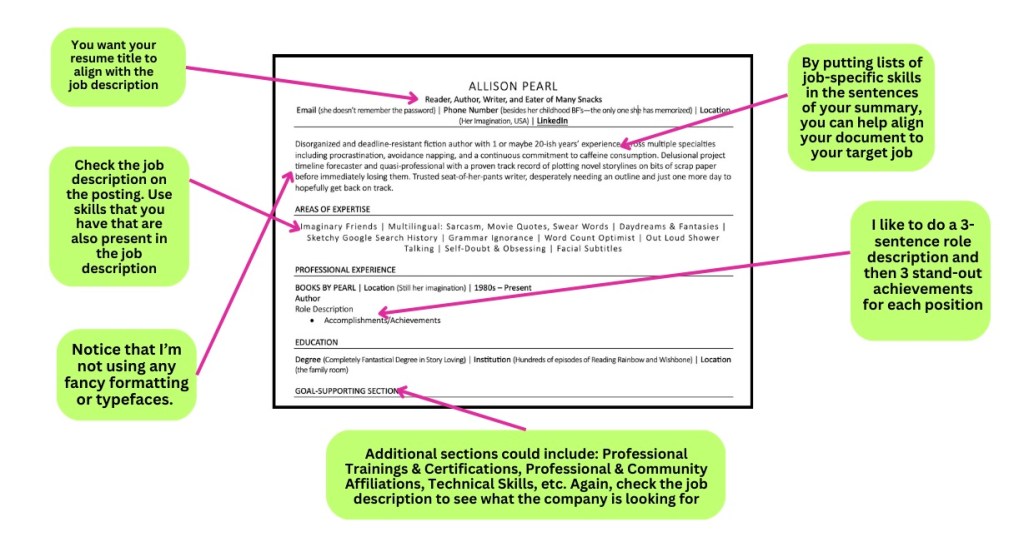
In last month’s post, I outlined the different sections you may want to include, such as a professional summary, skills list, professional experience breakdown, and your education or credentials. I also mentioned some things to avoid, like using columns or tables, but I thought this time a visual breakdown might be even more helpful. The below example is something easily made in Microsoft Word or any other word processing program. Avoiding the use of tables and columns will help ensure your document is read correctly by any ATS scans. Take a look at the notes on the sections for tips on how you can adjust these areas to support your specific job search.
During discussions about how ATS scans and even hiring managers may read the information on your document, sensitive elements of a career history, such as career gaps, will come up. Many legitimate reasons for a career gap are out there. College attendance, personal life investments, health issues, and a rough job market are valid reasons for there to be a few gaps in the list of dates on a resume, and most are easily explained during an interview. However, since you may need a successful ATS scan to get to the interview, it’s important that any weird formatting, like missing dates in your experience section or weird layouts, be avoided. Just keep things simple and clear as far as formatting but be thoughtful about how a human recruiter may read your information as well. Sometimes, if a client worked multiple positions during the same year, I may add one of those positions to an ‘Additional Experience’ section that lists professional experience entries without dates. Because it is in a different section than the Professional Experience section, you don’t have to worry about leaving off the dates and can avoid an appearance of ‘job hopping’ while still listing any valuable experience.
Beyond being simple and clear, you can also use tailoring to help your resume stand out and scan well in the Applicant Tracking Software. In some ways, an ATS scan is just a robot playing the match game between your resume and the job description of the position you are applying for. So, helping your resume have some commonalities with the job description is probably a good idea. Looking back to the above figure, you will see a list of skills and a summary with sentences structured with skills. These places are great opportunities to tailor your resume to skills listed in the job description. Another way to help tailor your resume to the job you’re seeking is to make it align with the desired job title. If the job you are seeking is titled ‘Quality Assurance Specialist’ and you’ve been a Quality Assurance Specialist in the past, I would go ahead and list that as your resume title. Now, if you are seeking a position you’ve never had before, but think your skills and experience still make you a qualified candidate for this new role, I suggest adding the word ‘Profile’ to the end of your resume title, such as ‘Quality Assurance Specialist Profile.’ This strategy tells the hiring manager that, while you haven’t had this position before, you are confident that the job is right for you.
Searching for a new job is not fun and writing your resume can feel even worse, but maybe these tips can make it just a little better. What about you, do you have any resume writing tips? Let us know and jump into the discussion below. And don’t forget to sign-up for the newsletter for more monthly tips or join Allison’s Book Club to talk books!
 Allison Pearl