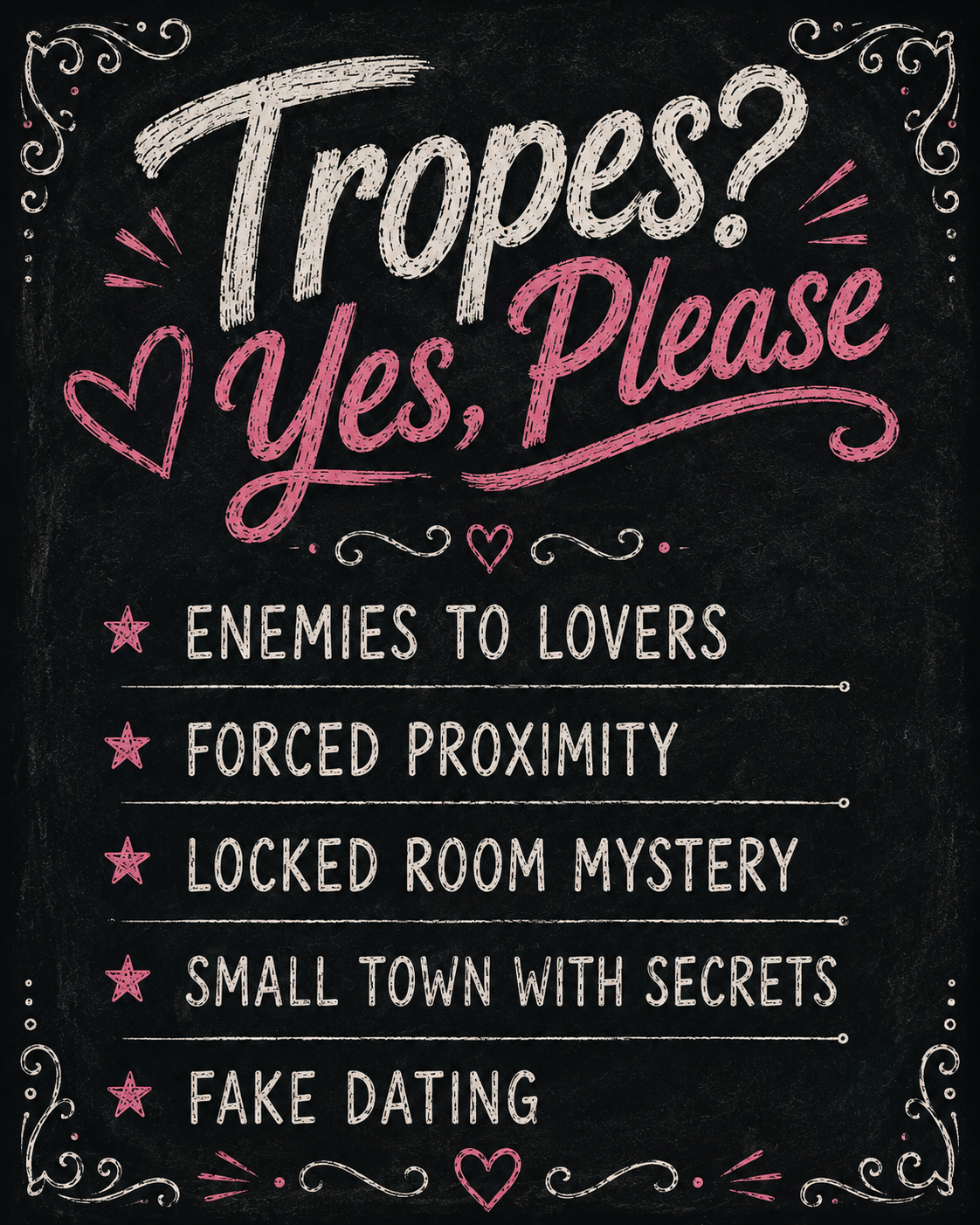
The use of tropes seems to bring out some strong opinions. You wouldn’t think these common plot devices would be so controversial, but take a stroll through BookTok and you’ll see that they are. On one side, I’ve seen videos of readers saying they DNFed a book when they discovered the plot moving toward just another ‘marriage of convenience’ or ‘grumpy/sunshine’ direction, and don’t even mention the ‘miscommunication trope’ unless you’re ready for a fight. While, on the other side, helpful Bookstagrammers will organize their recommendations based on the trope, like, “Check out this amazing ‘second chance romance’ or ‘locked-room mystery!’” etc. In general, when I write about a writing/reading issue, I don’t tend to take a super strong stand one way or another because most bookish topics are subjective, but in this case, I fall pretty strongly on the Pro-Trope side.
If that’s got your hackles rising, feel free to stop reading. I’ll understand.
In general, I think tropes get a bad rap. An unfair bad rap at that, because I can’t help but feel that people hating on these common themes and storytelling patterns don’t actually understand that ‘tropes’ permeate and sustain fiction as a whole and always have. The truth is that humanity is telling and listening to the same stories that we’ve been telling since the beginning of civilization. Across lands and languages, you will find the common themes of love, good vs. evil, revenge, and more. Every modern story is building on foundations laid decades, centuries, or even millennia ago.
More than once, I’ve heard someone describe a new movie/show/book they watched/read as “new and different,” but when they relay the details, there will be clear ties to the literature that came before. It’s like watching The Lion King as an adult and noticing the parallels to Shakespeare’s Hamlet. That Bible verse about there being nothing new under the sun is spot freaking on. When you think about it, ‘hating’ tropes is almost like hating fiction.
I know that sounds a bit harsh, and I promise I’m not trying to tell people what they should read. I routinely avoid certain genres and authors because they aren’t to my taste, and I won’t tell someone to finish a book they started if they aren’t enjoying it. Reading is a hobby, and hobbies are supposed to be fun. What I’m mainly getting to is that maybe these ‘trope haters’ may not actually hate the tropes, but instead take issue with how they were used and/or executed in a particular story.
For example, there is plenty of fiction out there that might use a popular trope to reinforce unfair stereotypes, and so I can see how someone might dislike a trope in that case. My suggestion, instead of writing off a book because it might have a trope you’ve read time and again, is to check if you like the author’s writing first, because while you may think you hate the ‘fake dating’ trope, it’s possible you’ve just never read it done by an author that speaks to you. After all, a lot of times what makes a book feel new and different isn’t that the author created a never-before-seen plot structure, but that they added their own unique flair or twist. For example…
The rest of this blog has some spoilers regarding the books Forget Me Knot by B.R. Goodwin and The Cuckoo’s Calling by Robert Galbraith. So, read at your own risk 😉
…the ‘grumpy/sunshine’ romance trope is one a lot of people (not me) might call tired or easy, but I recently read a book that used the trope in what I thought was a fun way. In B.R. Goodwin’s Forget Me Knot, the MMC is the grumpy and sunshiny side of the same coin. A traumatic brain injury left him with two personalities, and so our FMC falls in love with both the broody and introspective thinker and the golden retriever book boyfriend. Fun, right? A unique take on a tried and tested trope.
Another reason I think that books should be judged by the writing and not the tropes listed in the promos is because execution matters. Some trope-laden books seem cliché because the characters are one-dimensional and the events are too predictable, but with good writing, you may read a story that, at its basest, is just another ‘fill in your trope’ book but doesn’t feel like that at all.
One of my favorite examples of amazing execution is The Cuckoo’s Calling. At its stripped-down base, you could call this book just another ‘hidden will murder mystery,’ but characters that are so complex and yet relatable, paired with constant misdirection by the author, mean you don’t even realize that’s what you’re reading.
Ultimately, choose what books you read however you want to. Reading is all about vibes, and so, if you’re not in the mood for another ‘enemies to lovers’ tale, read something else. I would just suggest that you judge books by the writing and not the trope.
And if you’re in the mood for a very tropey romantic suspense read, check out Battered and Torn!

